
Victorine Njong
September 28, 2026
Activities for Memory Care Residents: A Guide
Table of Contents
- Why Activities Matter for Memory Care Residents
- How to Manage Dementia Anxiety Through Structured Activities
- Sensory Activities for Seniors With Dementia
- Music, Rhythm, and Creative Engagement
- Dementia-Friendly Games and Cognitive Stimulation
- Physical Movement and Gentle Exercise
- Building a Daily Activity Routine That Works
- Frequently Asked Questions
Last Updated: September 27, 2026
Why Activities Matter for Memory Care Residents
Structured activities for memory care residents aren’t just ways to pass time for those living with dementia or Alzheimer’s disease. They’re essential tools that reduce agitation, preserve cognitive function, and maintain emotional well-being. When someone experiences memory loss, purposeful engagement becomes one of the most powerful non-pharmacological interventions available.
At Providence Assisted Living Solutions, we’ve seen firsthand how the right activities transform daily life. Residents who participate in regular, person-centered activities often show fewer behavioral challenges and can experience a higher quality of life. The key is matching activities to each resident’s abilities and interests.
Activities work because they provide structure, purpose, and connection. A resident engaged in a meaningful task feels valued. Their mind stays active. They’re less likely to experience the anxiety and confusion that often accompany cognitive decline.
Pro Tip
Start with what the resident loved before memory loss. If someone was a gardener, bring plants into their space. If they loved music, play their favorite songs. Familiarity reduces anxiety and makes engagement easier.
Start with what the resident loved before memory loss. If someone was a gardener, bring plants into their space. If they loved music, play their favorite songs. Familiarity reduces anxiety and makes engagement easier.
How to Manage Dementia Anxiety Through Structured Activities
Dementia anxiety often stems from confusion, loss of control, and uncertainty about what’s happening. Structured activities reduce anxiety by creating predictable routines and giving residents something concrete to focus on. When your loved one knows what to expect, they feel safer.
The best approach combines routine with flexibility. Schedule activities at the same time each day so residents anticipate them. But stay flexible about what activity you actually do, some days, a resident may need something calming; other days, something more stimulating.
Simple activities work best for managing anxiety:
- Sorting tasks (buttons, coins, fabric scraps by color)
- Folding soft blankets or towels
- Watering plants or arranging flowers
- Listening to familiar music
- Looking through old photo albums
The goal isn’t perfection. It’s engagement. A resident doesn’t need to “complete” a task for it to be therapeutic. The act of doing something with purpose, alongside a caring person, is what matters.
Key Takeaway
Anxiety decreases when residents feel in control of something, however small. Let them choose between two activities. Let them decide when to take a break. These small choices restore dignity and reduce behavioral challenges.
Anxiety decreases when residents feel in control of something, however small. Let them choose between two activities. Let them decide when to take a break. These small choices restore dignity and reduce behavioral challenges.
Sensory Activities for Seniors With Dementia
Sensory engagement bypasses cognitive decline. When memory and language fade, the senses remain active. Touching textures, smelling scents, hearing sounds, and seeing colors all create moments of connection and calm. For caregivers, sensory activities offer a dual benefit: they calm residents while reducing caregiver stress and the emotional toll of behavioral challenges.
Sensory activities work especially well for residents in middle and late stages of dementia. They don’t require verbal ability or intact memory. A person who can’t speak can still enjoy the texture of silk, the smell of lavender, or the warmth of a hand massage. Sensory-focused interventions can help reduce agitation and anxiety in non-verbal residents.
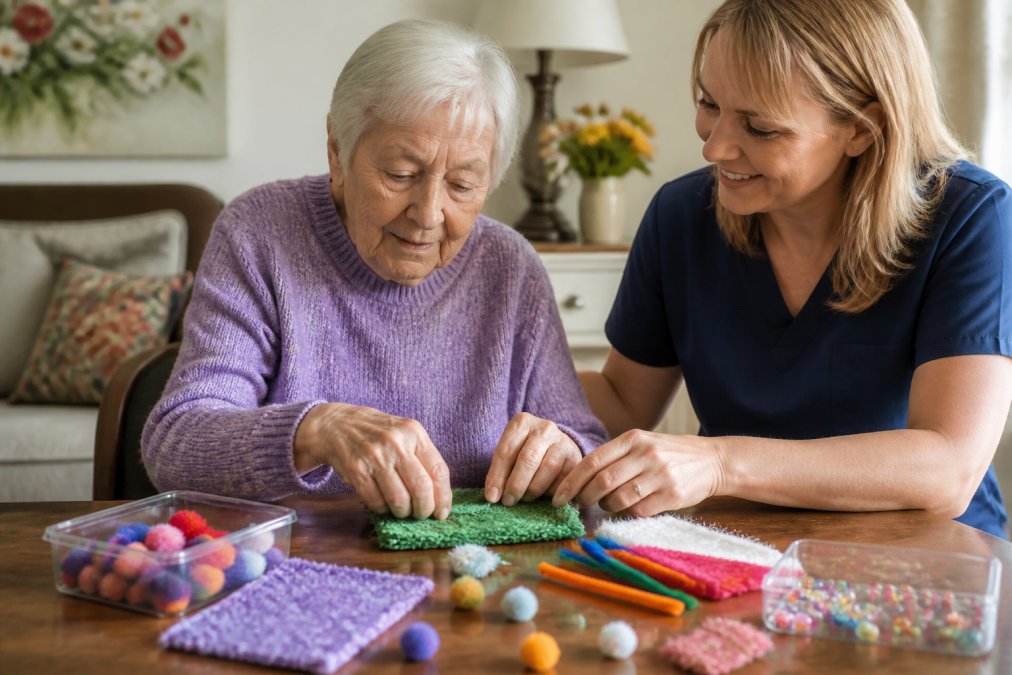
Stage-Specific Sensory Activities:
Early to Middle Stage:
- Texture exploration: soft blankets, smooth stones, textured fabrics, feathers, sandpaper, kinetic sand
- Scent activities: lavender sachets, citrus peels, fresh herbs, flowers, essential oil diffusers (used safely)
- Sound engagement: wind chimes, bells, music boxes, rhythm instruments, nature sounds recordings
- Visual stimulation: colored lights, nature videos, artwork with bold colors, light therapy boxes
- Taste experiences: small tastes of familiar foods (with safety precautions), herbal teas, flavored ice chips
- Combined experiences: baking (smell, taste, touch, sound), nature walks (sight, sound, smell, movement), hand massage with scented lotion
Late Stage and Non-Verbal:
- Hand and foot massage with unscented or lightly scented lotions, provides tactile comfort and reduces restlessness
- Weighted blankets or lap pads, calming pressure without requiring active participation
- Gentle hand-over-hand activities, guiding the resident’s hands through textures or movements creates connection without verbal instruction
- Ambient sensory environments, soft lighting, gentle background music, pleasant room temperature, and subtle scents create a calming atmosphere
- Tactile objects at hand level, textured balls, soft scarves, smooth stones placed within reach for passive exploration
- Aromatherapy via diffusion, lavender, chamomile, or rose scents have been shown to reduce agitation in advanced dementia (use cautiously; some residents may find strong scents distressing)
Why Sensory Activities Reduce Caregiver Burnout:
When a resident is engaged in a sensory activity, behavioral challenges can often decrease. Agitation, wandering, and repetitive questioning may subside during and after sensory engagement. This can give caregivers a window of calm, potentially reducing the emotional exhaustion of constant redirection and crisis management. A caregiver who finds that hand massage or a sensory basket creates peace has a concrete tool to help manage their own stress and prevent burnout.
Multisensory activities combine two or more senses for richer engagement. Baking engages smell, taste, touch, and sound. A nature walk brings together sight, sound, smell, and movement. A hand-massage session with music combines touch and hearing. These combined experiences can create a sense of calm and may be effective for residents who become easily bored or restless.
Safety and Personalization:
Always supervise sensory activities, especially for residents who may put objects in their mouths or have swallowing difficulties. Avoid strong scents that could overwhelm or trigger negative memories. Keep textures safe, nothing sharp, small enough to choke on, or toxic if ingested. For residents with sensory sensitivities (common in advanced dementia), start gently and observe responses. Some residents may initially resist new sensory input; patience and gradual introduction often lead to acceptance.
Personalize sensory choices based on the resident’s history. If someone loved gardening, prioritize plant-based sensory activities. If they were a baker, focus on baking-related scents and textures. If they enjoyed the ocean, use sea-scented lotions or play ocean sounds. This personalization deepens engagement and often triggers positive memories or emotional responses.
Key Takeaway
Sensory activities are one of the most powerful tools for managing late-stage dementia behaviors while simultaneously giving caregivers a break from crisis management. A calm resident means a less stressed caregiver, making sensory engagement a win for both.
Sensory activities are one of the most powerful tools for managing late-stage dementia behaviors while simultaneously giving caregivers a break from crisis management. A calm resident means a less stressed caregiver, making sensory engagement a win for both.
Music, Rhythm, and Creative Engagement
Music reaches people with dementia in ways words often can’t. Even when verbal communication becomes difficult, residents often recognize songs, move to rhythm, and respond emotionally to melodies they loved.
Music therapy isn’t about performing well. It’s about feeling. A resident doesn’t need to sing on key or remember the lyrics. Simply listening to familiar songs, playing simple rhythm instruments, or moving to a beat provides therapeutic value.
Creative activities, painting, drawing, collage, offer similar benefits. They allow self-expression without requiring words or perfect recall. A person with advanced memory loss can still enjoy the sensory experience of holding a paintbrush and moving it across paper.
Rhythm instruments work especially well in group settings:
- Drums and hand percussion
- Shakers and maracas
- Tambourines and bells
- Xylophones and chimes
- Kazoos and harmonicas
Group music and rhythm activities build social connection while providing cognitive stimulation.
Watch Out
Avoid overstimulation. Loud music or too many instruments at once can increase agitation in some residents. Start gently and watch for signs of distress. If a resident becomes agitated, pause and try a calmer activity.
Avoid overstimulation. Loud music or too many instruments at once can increase agitation in some residents. Start gently and watch for signs of distress. If a resident becomes agitated, pause and try a calmer activity.
Dementia-Friendly Games and Cognitive Stimulation
Games provide cognitive stimulation while remaining engaging and fun. The key is choosing games that match the resident’s current abilities, not what they could do five years ago.
Effective cognitive games and activities:
- Bingo (large-print cards, large-print numbers)
- Dominoes and tile games
- Card games (Go Fish, Crazy Eights, simple matching)
- Jigsaw puzzles (100-300 pieces, large pieces)
- Matching games and memory games
- Trivia about familiar topics
- Word games that don’t require spelling
Best For
Residents in early to middle stages of dementia benefit most from traditional games. As cognitive decline progresses, switch to simpler activities like sorting, sensory play, and music rather than rule-based games.
Residents in early to middle stages of dementia benefit most from traditional games. As cognitive decline progresses, switch to simpler activities like sorting, sensory play, and music rather than rule-based games.
Physical Movement and Gentle Exercise
Physical activity maintains strength, balance, and flexibility while boosting mood and sleep quality (the CDC). For residents with dementia, movement also provides sensory input and helps manage restlessness and agitation.
Structured movement activities:
- Chair yoga and gentle stretching
- Walking programs (indoors or outdoors)
- Dancing to familiar music
- Tai chi adapted for seated or standing positions
- Ball games and tossing activities
- Swimming or water aerobics (if available)
- Gardening and outdoor work
Building a Daily Activity Routine That Works
The most effective activities are the ones that happen consistently. A daily routine gives residents structure, reduces anxiety, and makes engagement easier.
A sample daily routine might look like:
- Morning (after breakfast): gentle stretching or chair yoga
- Mid-morning: sensory activity or craft project
- Afternoon: social activity or game with another resident
- Late afternoon: music or reminiscence activity
- Evening: quiet activity like photo viewing or hand massage
Frequently Asked Questions
What are the best activities for memory care residents in early-stage dementia?
Early-stage residents often benefit from activities that maintain independence and cognitive engagement. Jigsaw puzzles, gardening, reminiscence activities with photo albums, and group games like bingo work well. These activities preserve fine motor skills and encourage social interaction while providing purposeful engagement. Tailor activities to the person’s former hobbies and interests, someone who enjoyed cooking may enjoy simple food preparation tasks. The goal is meaningful participation that builds confidence rather than frustration.
How do sensory activities for seniors with dementia reduce agitation?
Sensory engagement activates multiple senses simultaneously, which can calm the nervous system and redirect anxious energy. Soft textures, gentle music, aromatherapy, and hand-over-hand activities create a soothing environment. Multi-sensory stimulation helps ground residents in the present moment, reducing confusion and behavioral distress. Non-pharmacological interventions like these can be effective tools for managing agitation without medication, potentially improving both emotional well-being and quality of life.
What should caregivers avoid when planning activities for memory care residents?
Avoid activities that create frustration, shame, or cognitive overload. Don’t present tasks that are too difficult or require sustained concentration for long periods. Skip competitive games that may trigger agitation if someone loses. Avoid activities that emphasize memory loss directly, like quizzes about recent events they won’t remember. Instead, focus on person-centered care that respects dignity, allows for success, and adapts to the resident’s current abilities rather than dwelling on what they’ve lost.
How can dementia-friendly games support cognitive function without causing stress?
Dementia-friendly games use simple rules, large pieces, and minimal competition. Matching games, card games with bold images, and cooperative activities allow residents to participate at their own pace. These games stimulate fine motor skills and hand-eye coordination while providing social interaction and purposeful engagement. The key is choosing games where there’s no “losing”, focus on the activity itself rather than winning. This approach maintains cognitive stimulation while protecting emotional well-being and preventing frustration.
Recent Post

Big News! Providence Assisted Living Solutions
State Long-Term Care Ombudsman Program
May 12, 2026

Our Friendly Staff
May 27, 2026